Avox
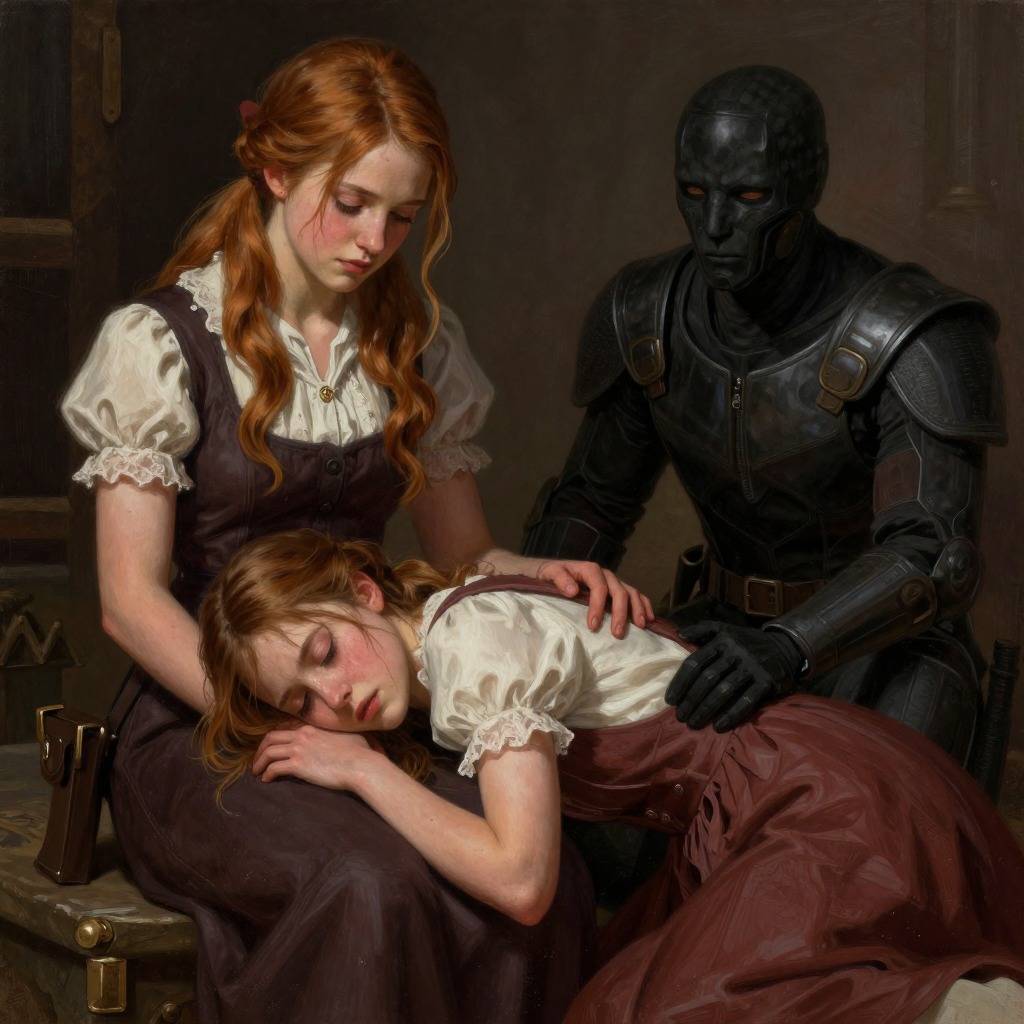
The Avox are a class of punished individuals in Panem, their tongues cut out as a penalty for crimes against the Capitol. They are reduced to silent servants, their muteness a permanent, visible mark of the Capitol's absolute authority. The term is first explained to Katniss Everdeen by Haymitch Abernathy during a dinner in the Capitol, when she recognizes a red-haired server as a girl she had seen captured in the woods. Haymitch states bluntly, "Someone who committed a crime. They cut her tongue so she can't speak," and adds that she is "probably a traitor of some sort." Effie Trinket reinforces the social prohibition, instructing Katniss that she is not to speak to an Avox "unless it's to give an order." The Avox thus embody the Capitol's power to erase not only a person's freedom but their fundamental capacity for communication and self-expression.
Origin and Punishment
The Avox punishment is a direct consequence of the Capitol's legal system, which emerged from the Dark Days—the uprising of the districts against the Capitol. As recounted by Mayor Undersee at the reaping, the Treaty of Treason established the laws that "guarantee peace" and instituted the Hunger Games as an annual reminder of the Capitol's victory. The Avox system operates within this framework of total control. The red-haired girl Katniss encounters was captured by a hovercraft in the woods outside District 12, along with a boy who was killed. Katniss and Gale Hawthorne witnessed the capture but did not intervene. The girl's crime, as Haymitch suggests, was likely treason—attempting to flee the Capitol. The punishment is not merely imprisonment or death but a living sentence of silence, transforming the offender into a tool for the very system they opposed.
The Red-Haired Avox Girl
The most prominent Avox in the narrative is the red-haired girl who serves Katniss and Peeta Mellark in the Capitol. Katniss recognizes her from the woods, where she and Gale saw her and a boy being captured by a hovercraft. The girl had locked eyes with Katniss and called out for help, but neither Katniss nor Gale responded. This memory haunts Katniss, filling her with guilt and shame. When she sees the girl again in the Capitol, she is overwhelmed by the realization that she did nothing to help. The girl's presence serves as a constant reminder of Katniss's complicity in the Capitol's brutality. Despite the prohibition on speaking to her, Katniss attempts to apologize, whispering, "I should have tried to save you." The girl shakes her head, perhaps indicating that Katniss would have ended up an Avox or dead herself. Later, the girl cleans Katniss's wounds and tucks her into bed, an act of kindness that deepens Katniss's sense of indebtedness and guilt.
Narrative and Thematic Significance
The Avox function as a powerful symbol within the story, representing the Capitol's capacity to dehumanize and silence its opponents. They are the living embodiment of the consequences of rebellion, a warning to all who might challenge the established order. The red-haired girl's muteness is not just a physical condition but a narrative device that forces Katniss to confront her own moral failures. The girl's silent presence—her "knowing reproachful eyes"—accuses Katniss of being "a coward, a monster, a puppet of the Capitol." This internal conflict underscores the novel's exploration of complicity, guilt, and the difficulty of resistance in a totalitarian state. The Avox also highlight the arbitrary and brutal nature of Capitol justice, where even a failed attempt at escape can result in a lifetime of servitude and silence. Their existence reinforces the pervasive fear that governs Panem, reminding both characters and readers that the Capitol's power extends beyond the arena into every aspect of life.